AI and Data Privacy Knowledge Hub

6 Core Principles of the Digital Personal Data Protection (DPDP) Act You Need to Know

India’s Digital Personal Data Protection Act (DPDP) rests on six core principles that shape how personal data is handled. These pillars are essential for creating a secure and rights-based data governance framework.
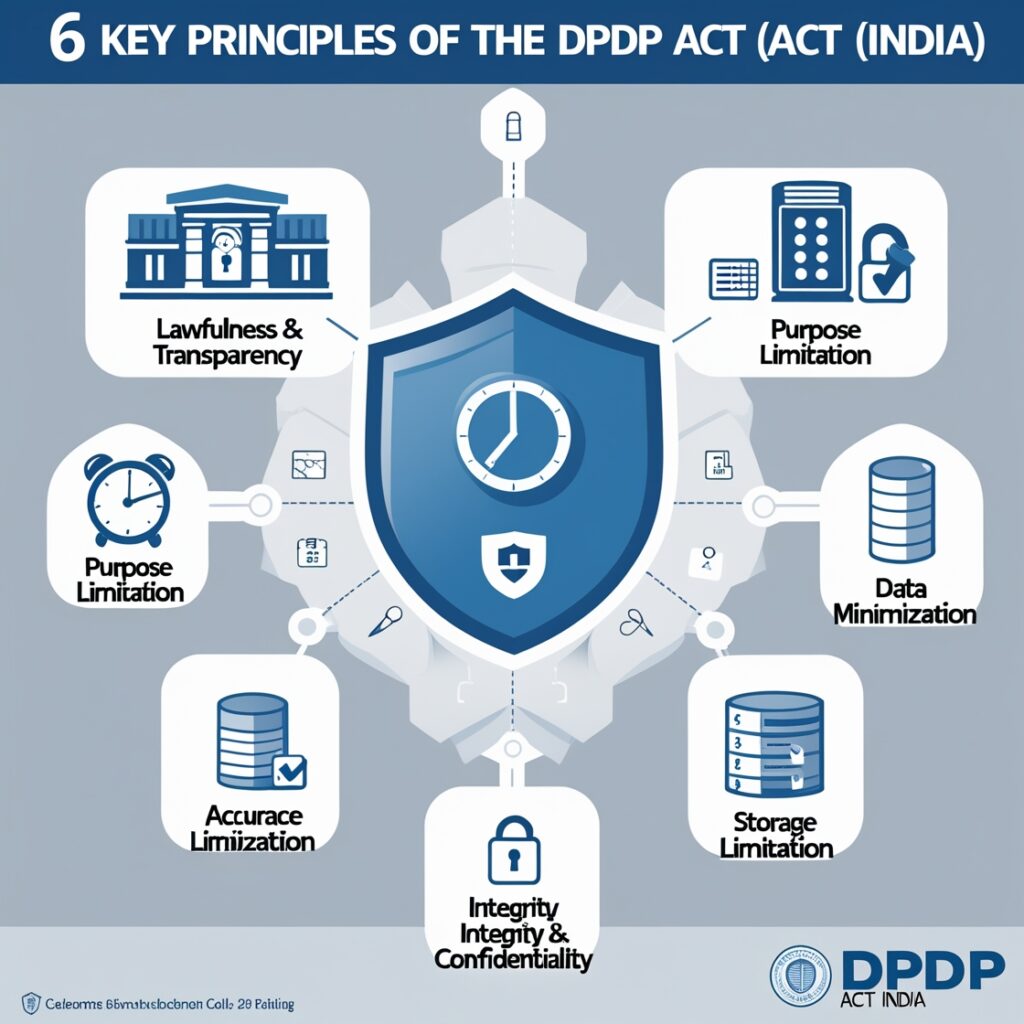
1. Lawful and Transparent Processing
Every action involving personal data must have a lawful basis. Data Fiduciaries must operate transparently, keeping individuals informed about what data is collected and how it is used.
2. Defined Purpose Only
Data should only be collected for clear and lawful objectives. Any further use should not deviate from the original reason unless the new use aligns legally.
3. Minimal Data Collection
Less is more. Organizations must avoid excessive data collection and stick to gathering what’s necessary for the task at hand.
4. Ensure Data Accuracy
Information must be correct and, if needed, regularly updated. Organizations should allow users to correct inaccurate or outdated data.
6. Security and Confidentiality
Organizations are obligated to secure data with technical and organizational safeguards. This includes protection from hacks, leaks, or misuse.
These principles guide ethical decision-making, reinforce data subject rights, and drive compliance with India’s growing digital privacy regulations.
#DataPrivacy #DataProtection #PrivacyByDesign #DigitalPrivacy #PersonalData #DataSecurity #CyberSecurity #PrivacyMatters #DPDPAct #DPDP2023 #DigitalPersonalDataProtection #IndiaDataPrivacy #IndianPrivacyLaw #PrivacyComplianceIndia #DataGovernance #PrivacyCompliance #DataEthics #ComplianceMatters #RegTech #DataFiduciary #RiskManagement #KnowYourRights #ProtectYourData #SecureYourData #TrustInTech #DigitalRights